Everything about Styrofoam

Styrofoam recipe
Styrofoam is expanded polystyrene made up of a small amount of polystyrene and a large amount of air. More specifically, it is 98% air and only 2% polystyrene, the cellular structure. Unlike the packaging, the styrofoam insulation also contains a polymer flame retardant. The latest “Gray EPS” version contains tiny graphite particles to retain heat even better. Better insulation means that even less heating energy is required, so that even older buildings become 3-litre houses.
The raw material polystyrene
Polystyrene is a long chain of hundreds of thousands of identical molecules of styrene. This single component is very different from plastic, which is a colorless, sweet-smelling liquid. It is not unknown in nature, being found in coal tar and in small amounts in strawberries, cinnamon and coffee beans. In 1931, Ludwigshafen researchers developed the first technological process for the production of styrene in large quantities.
Styrofoam production in detail
In the classic suspension polymerization, water and styrene are mixed. Adding the blowing agent pentane creates a bead-shaped granulate, the so-called expandable polystyrene. These EPS beads instantly expand to about 50 times their original size when heated with steam. After the intermediate storage, foam beads are filled into block molds and welded by repeatedly heating them with steam. After a certain storage time, the resulting Styrofoam blocks are cut into insulating boards. In contrast, special packaging and insulation boards (e.g. perimeter insulation boards) are manufactured separately on molding machines (“machine boards”).
Summary of Styrofoam – a coveted raw material that is 100% recyclable
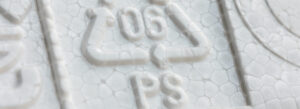
Styrofoam is both mechanically and chemically recyclable. Due to the high calorific value of polystyrene, thermal recycling is also an option. Styrofoam is popular as a recyclable material, so there are no disposal costs. The demand for styrofoam waste is very high in Austria, more than 100,000 m3 are imported from abroad every year. Ground styrofoam is used, for example, as an aggregate in lightweight concrete and insulating plaster and as a pore-forming agent in the brick and tile industry. Polystyrene granules made from melted Styrofoam waste are processed into park benches, fence posts, shoe soles and more. Cement plants use polystyrene as an alternative fuel and incinerators use polystyrene for auxiliary combustion construction, saving valuable kerosene. The recycling of styrofoam in thermal insulation composite systems is already practiced today. After removing (“stripping”) the plaster system, the insulation panels are removed from the wall and recycled separately. It should be noted here that the detachment of the plaster system also forms the basis for the standardized “doubling” variant. This means that a second layer of thick polystyrene is usually applied to the existing thin polystyrene facade.
NFM Recycling takes care of the recycling of polystyrene using the latest technology from the ECOEPS system. If you have styrofoam you can drop it off at NFM Recycling. Containers can be made available for larger quantities. Feel free to contact NFM Recycling.